
Best for Audio Quality
Best Camera for Music (Updated for 2026)
What’s the best camera for music in 2026?
If you’re a musician, educator, or creator, you’re probably recording performances, lessons, rehearsals, or content for YouTube and social media. You want something that sounds good, looks good, and—most importantly—doesn’t get in the way of making music.
The truth is: there is no single perfect camera for music. Every option involves tradeoffs between audio quality, video quality, and flexibility.
In 2026, these three cameras clearly stand out—each for a different reason:
The Truth About Cameras for Music
If you require truly professional video and audio, none of these cameras will replace a full production setup with external microphones, interfaces, lighting, and interchangeable-lens cameras.
That hasn’t changed.
What has changed is how good compact cameras have become at capturing usable, shareable, and reliable music content with minimal setup.
For most musicians, the best camera for music is the one that:
-
Sounds good enough
-
Looks good enough
-
Lets you hit record and focus on playing
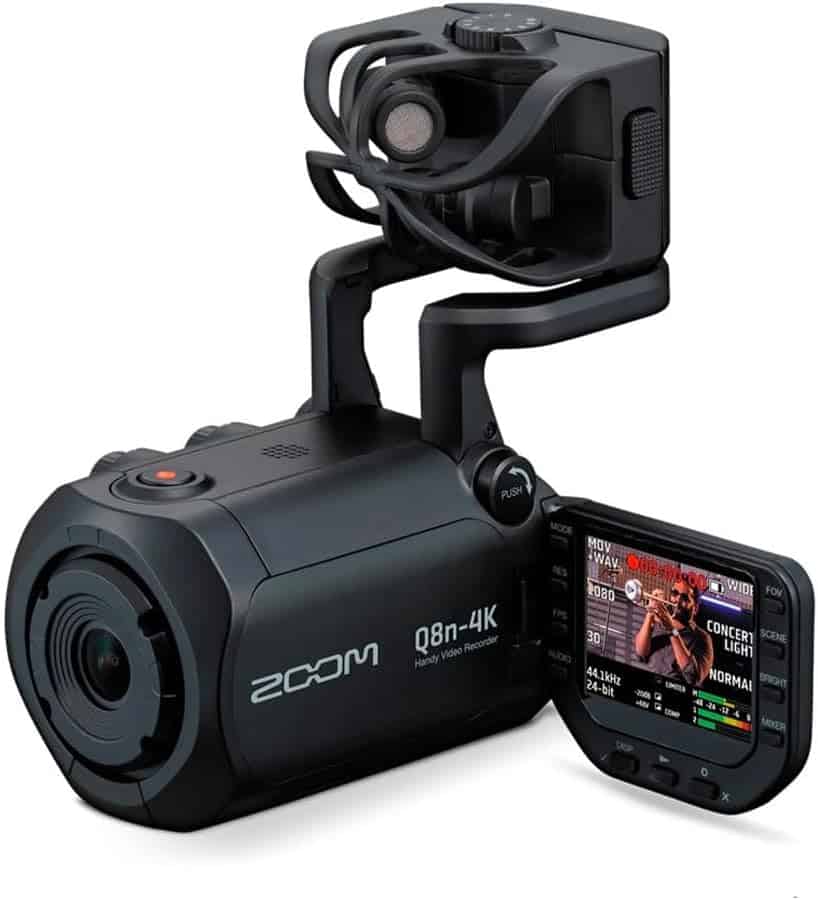
Zoom Q8n-4K — Best Camera for Audio Quality
If audio quality is your top priority, the Zoom Q8n-4K is still the most musician-focused camera available.
Why it works for music
-
Built-in microphones sound better than action or vlogging cameras
-
XLR inputs allow you to connect external microphones
-
Designed specifically for recording music and performances
While it won’t replace a dedicated audio interface or studio microphones, the Q8n-4K consistently delivers more usable sound than other all-in-one cameras.
Best for:
-
Rehearsals
-
Lessons
-
Live performance documentation
-
Situations where audio matters more than cinematic video
The Zoon Q8n-4K is typically priced at around $400.
Zoom Q8n-4K Review | Best Camcorder for Music Makers?
Zoom Q8n-4K Video Quality (Picture & Audio Test)
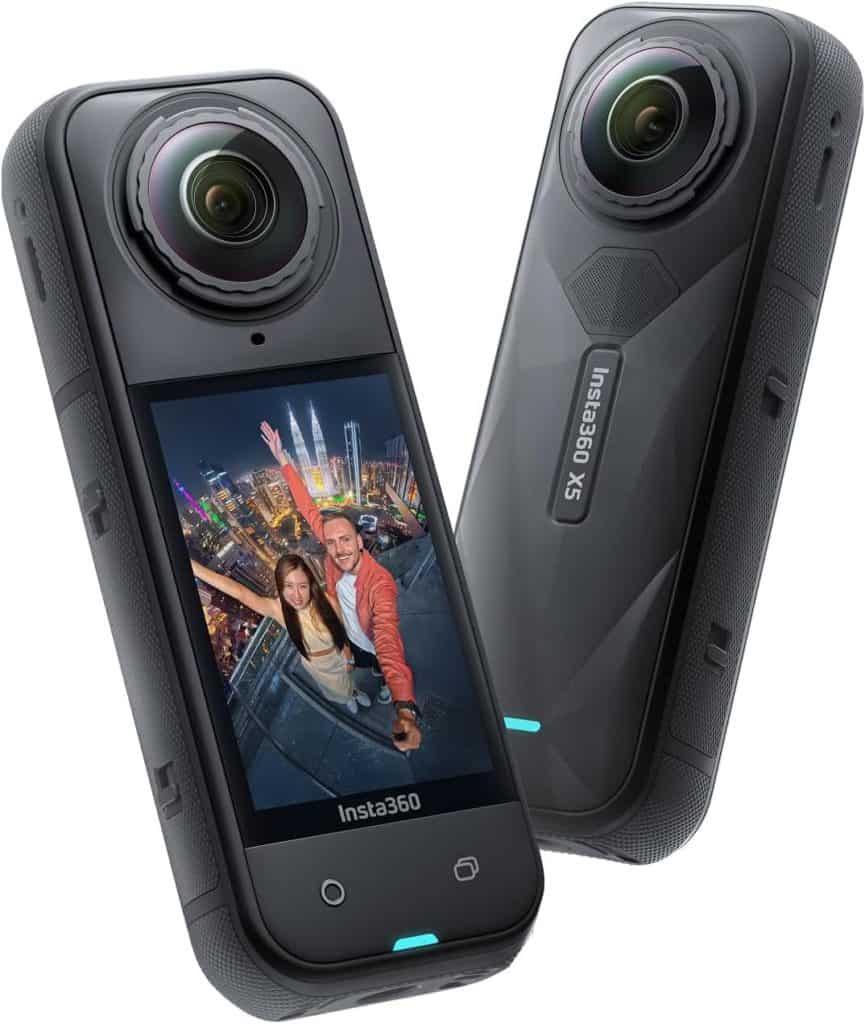
Insta360 X5 — Best for Editing Flexibility & Unique Shots
The Insta360 X5 fundamentally changes how musicians can record performances.
Instead of committing to a camera angle while you’re trying to play, the X5 records everything—letting you decide framing later.
Why it works for music
-
Records 360° video so you can choose angles in post
-
One camera can replace multiple camera positions
-
Great for live shows where you don’t want to manage gear
-
Easily creates:
-
Wide shots
-
Close-ups
-
Vertical clips for social
-
Traditional horizontal video
-
This flexibility is incredibly valuable for musicians who want content without constantly resetting cameras or worrying about framing.
Best for:
-
Live performances
-
Creative performance videos
-
Social media content
-
Situations where flexibility matters more than perfect audio
The Insta360 X5 is typically priced at $550 on Amazon.
Insta360 X5 Sample Footage
Insta360 X5 – Through the Eyes of a Filmmaker
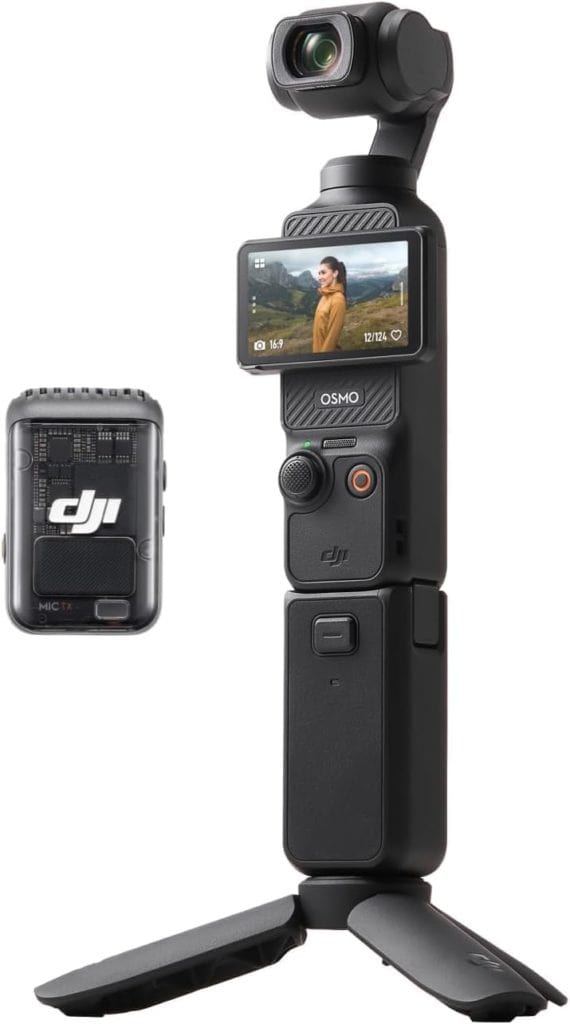
DJI Osmo Pocket 3 (Creator Combo) — Best All-Around Camera for Music
If you want the best overall balance of video quality, portability, and versatility, the DJI Osmo Pocket 3 (Creator Combo) is the strongest all-around option in 2026.
Why it works for music
-
Excellent image quality for its size
-
Built-in gimbal stabilization
-
Compact and fast to deploy
-
Creator Combo includes wireless mic support, making it viable for talking and teaching
It’s not a dedicated music camera, but it excels as a do-everything tool—especially if you also create educational or vlog-style content.
Best for:
-
YouTube content
-
Vlogging and teaching
-
Practice videos and demos
-
Musicians who want one camera for many uses
The DJI Osmo Pocket 3 Creator Combo is typically priced at $654.
DJI Osmo Pocket 3 Review (Great Creator Camera)
DJI Osmo Pocket 3 Creator Combo Unboxing
Which Camera Is Best for You?
-
Prioritize audio quality → Zoom Q8n-4K
-
Want maximum flexibility and creative angles → Insta360 X5
-
Need one camera that does almost everything well → DJI Osmo Pocket 3 (Creator Combo)
No single camera is perfect—but these three cover the most important use cases musicians face today.
Final Thoughts
The best camera for music in 2026 isn’t about specs—it’s about workflow.
If a camera slows you down, it won’t get used.
If it lets you record easily, it becomes part of your creative process.
Choose the camera that fits how you actually make music—and then stop thinking about gear and start playing.
Note: The article below was originally written in 2019. While much of the information is still relevant, please refer to the 2026 update for the most current recommendations.
Best Camera for Music (Written in 2019)
What’s the best camera for music on the market in 2019? You might be trying to find a camera for music videos, live performances, lessons, or rehearsals. The cameras covered in this article are: Zoom Q8, Zoom Q4n, Zoom Q2N, GoPro HERO 5 Black, GoPro HERO 5 Session, and Sony HDR MV1. I also looked at mobile phone options such as the Shure MV88, Rode iXYL, and Zoom iQ7.
The Truth About Cameras for Music
If you require top of the line video or audio, none of these cameras will work for you.
Truly pro-grade video or audio requires an investment of at least several hundred dollars. None of these cameras, despite some having 4k specs, are able to record pro-grade video. None of the cameras, even the Zoom Q8 that has two XLR inputs is able to record pro-grade audio.
However, these options do offer decent quality video with decent quality sound. They’re also easy to use, requiring very setup time and little to no adjustments. Perhaps most of all, they’re very affordable when compared to pro-grade video and audio options.
Factors to Consider When Buying a Camera for Music
Do you value video or audio quality? In general the Zoom cameras sound better, while the GoPros tend to look better. If you’re going to be focusing more on the sound, go with the Zoom. If you would rather have decent video, go with the GoPro.
How else do you plan on using the camera? All Zoom and GoPro models in this article can be used as a webcam. In this case, you might lean towards the Zoom because of the better audio quality. On the other hand, GoPros have many uses such as outdoors, sports, etc.
How much stuff do you want to carry? The advantage of the mobile options is that you only have to carry the mic. You can probably get away without even using a tripod. Not the case with the Zoom and GoPros.